
A café can feel lively and still be a comfortable place to talk. When guests raise their voices or staff struggle to hear orders, it is time to look at how sound moves through the room.
Acoustic lighting for cafés combines a light source with sound-absorbing surfaces. It can add absorption above seating while helping shape the look of the space. Start with the café layout, then choose fixtures that suit both the lighting needs and the wider acoustic plan.
Why Café Noise Builds Up
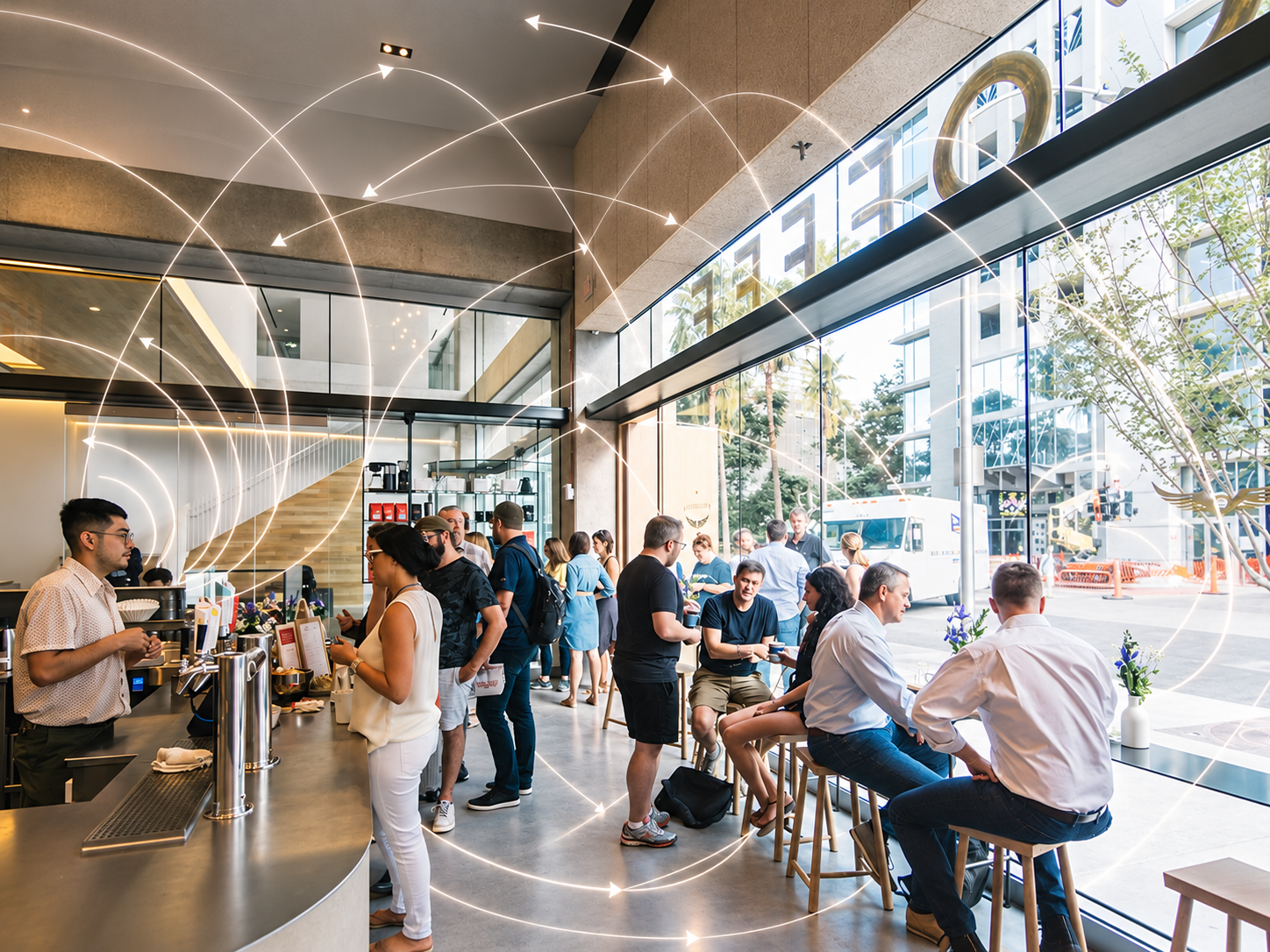
A café has several sound sources: conversations, music, coffee grinders, dishes and moving chairs. These sounds can reflect from glass, hard floors, walls and ceilings.
As more guests arrive, more people talk at once. Room size and reverberation also affect the noise level. ODEON’s overview of restaurant acoustics explains how these factors interact in dining spaces.
First, identify the main problem. Loud music needs a volume or speaker check. Noisy equipment may need service. Sound that lingers in the room may call for more absorption.
Absorbing surfaces help reduce reflections inside a room. Blocking noise from a nearby space requires a separate review of doors, walls and openings.
Plan Around Three Café Zones
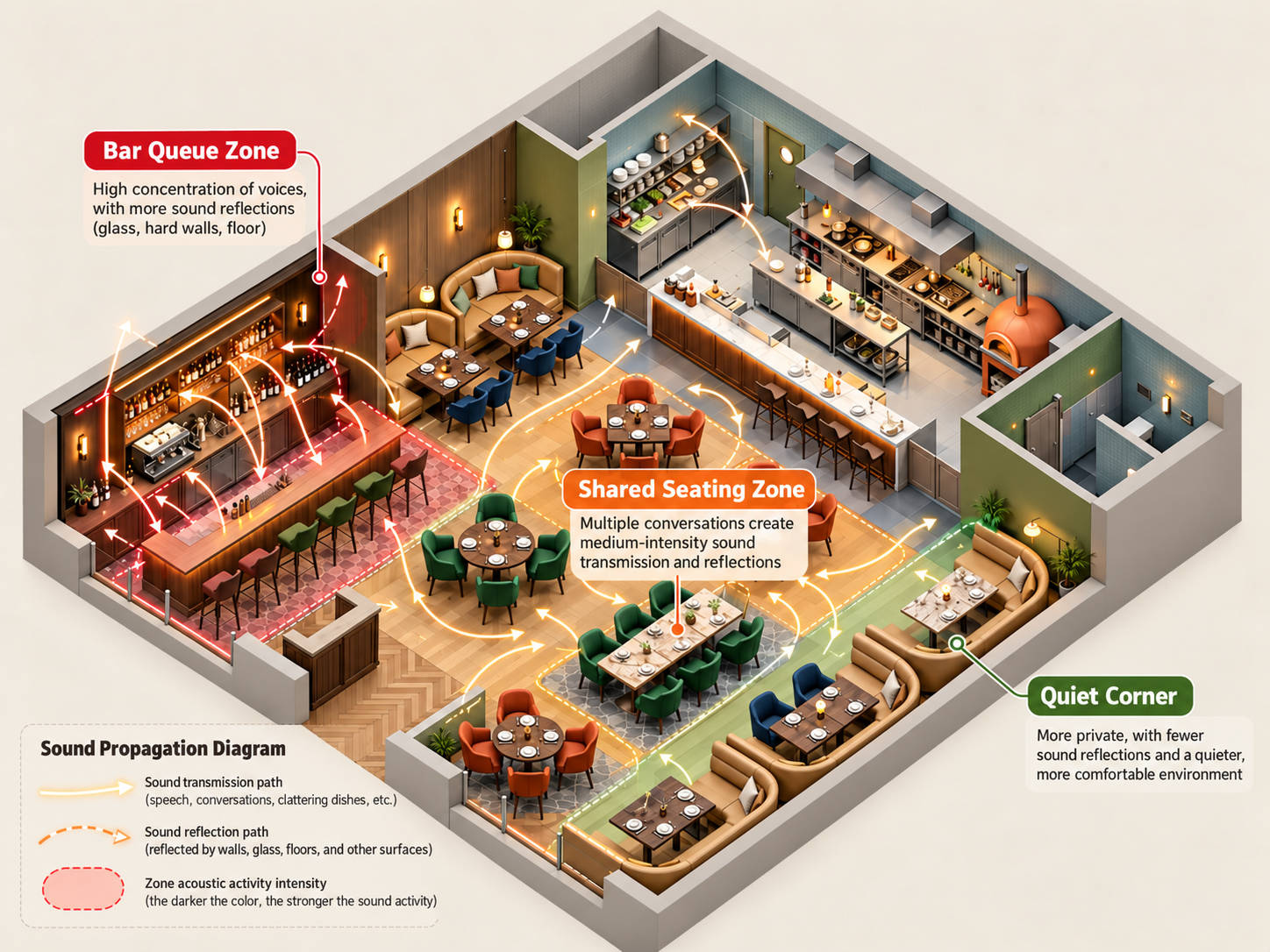
The counter and queue
Staff need to hear orders, read labels and work under clear light. Check the counter lighting and listen for noise from machines, dishes and nearby speakers.
Keep fixture positions clear of work areas and ceiling services. Choose a design that staff can reach for cleaning and maintenance.
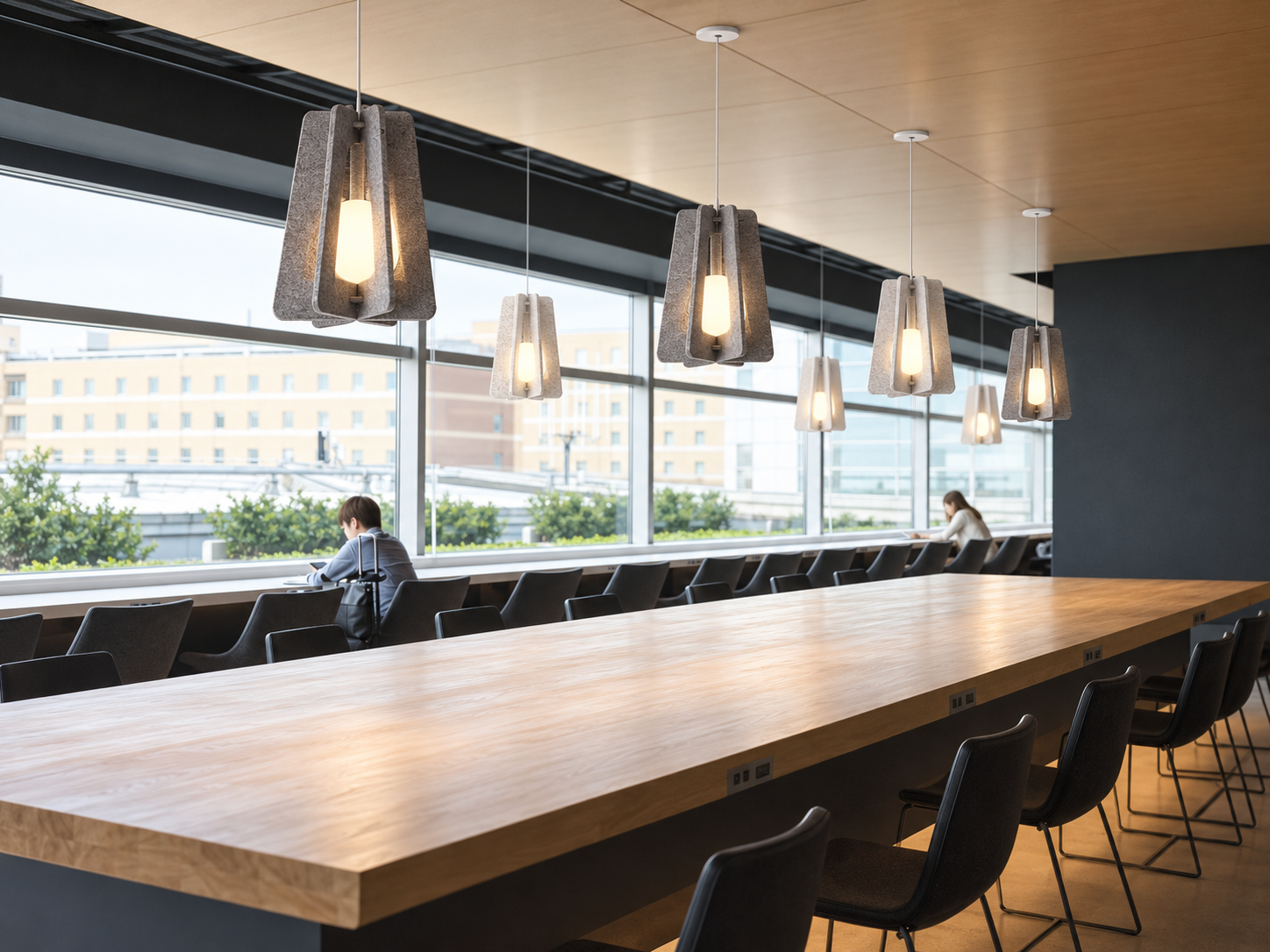
Shared tables and social seating
These areas may host several conversations at once. Use the table plan to develop possible lighting positions.
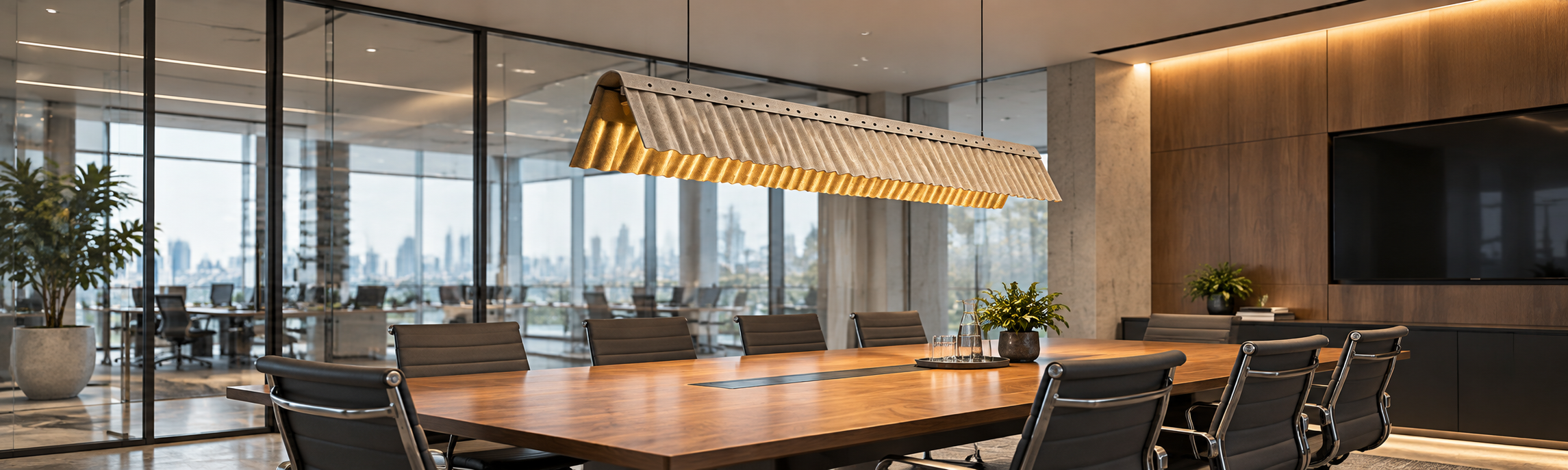
An acoustic pendant can create a visual focus above a seating group. A linear fixture may follow a long shared table. Check light coverage and the room’s need for absorption before deciding on size or quantity.
Quieter corners
Some guests come to read, work or have a quiet conversation. Where the layout allows, place these seats away from speakers, queues and busy service areas.
Lighting can give the corner its own visual character. Acoustic lighting alone will not stop speech travelling from nearby social tables. The layout may also need screens, greater distance or other treatment.
Choose a Form That Fits the Furniture
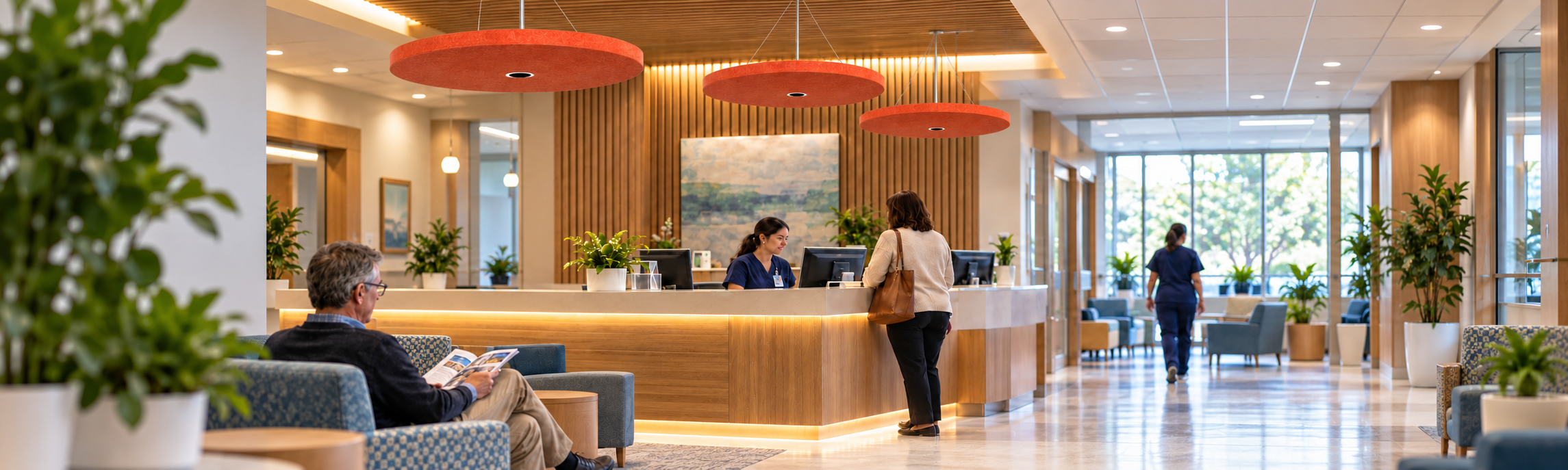
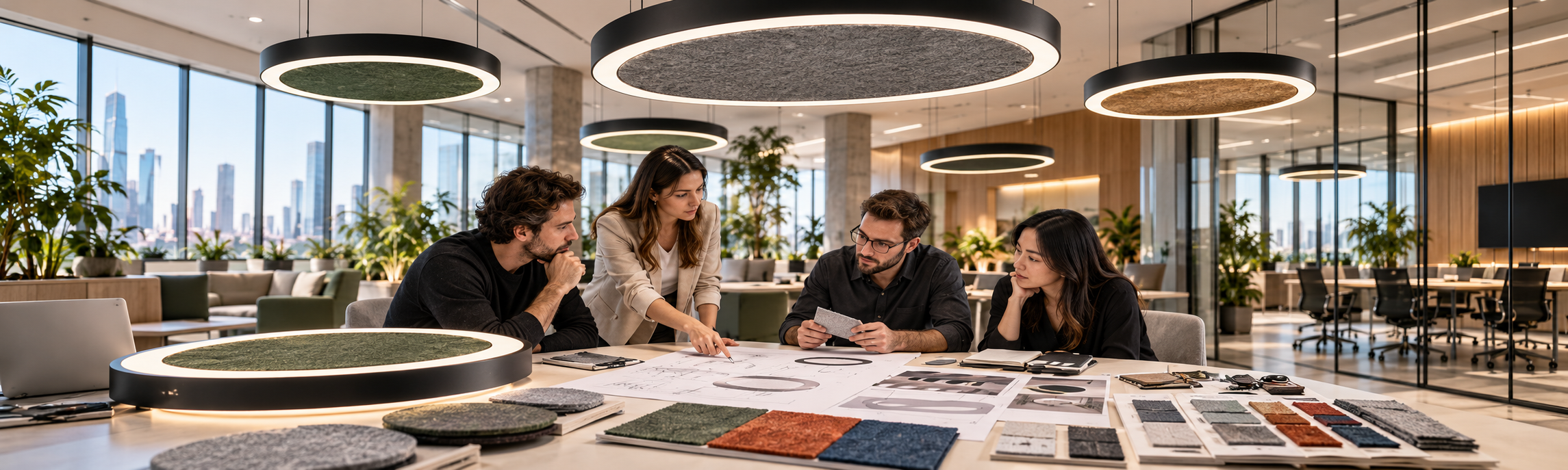
Explore acoustic pendant lights for individual tables and seating groups. Compare acoustic linear lights for long tables or counters.
Review each option from both seated and standing positions. Will it block a view? Does it put light where people need it? Can staff clean it without moving large amounts of furniture?
Avoid choosing a fixed number of lights per table. Fixture size, light distribution, mounting height and room conditions all affect the layout.
Keep the Lighting Comfortable
Guests need enough light to read a menu and see the people across the table. Staff need useful light for their tasks.
Check glare from seated positions, reflections on screens and the effect of daylight near windows. Review the evening setting as well as the daytime view.
If different lighting settings are needed, confirm dimming and control options for the selected model. A fixture’s shape alone does not show how it will light the space.
Check the Details Before Ordering
Gather the room plan, seating layout, ceiling height and clear site photos. For each shortlisted fixture, confirm:
-
Dimensions, weight and mounting method.
-
Ceiling support, power supply and hanging height.
-
Light output, distribution and controls.
-
Cleaning needs and access for maintenance.
-
Acoustic test information relevant to the chosen model.
Ask whether the acoustic data describes the material or the complete fixture. A material rating alone does not establish how the installed lights will perform in your café.
If the project needs a measured acoustic target, have an acoustic professional assess the room and the proposed treatment.
Look Beyond the Light Fixtures
A café with extensive glass and hard finishes may need additional wall or ceiling absorption. Curtains or upholstered seating can also contribute where they suit the design and cleaning routine.
Consider these options together. If the existing lights already work well, separate acoustic treatment may be a practical choice.
Also review music levels, speaker positions and noisy equipment. Adding absorption does not remove the need to manage those sources.
Review the Café During Busy Hours
Compare the same seating areas before and after the work. Keep guest numbers, music and equipment use as similar as possible.
Ask staff whether orders are easier to hear. Ask guests whether conversation feels more comfortable. Check for glare and dark areas too.
Feedback can help identify the next step. Use measurements if the project needs proof that an agreed acoustic target has been met.
Plan Your Café Project With TUER
Share your floor plan, ceiling height, seating layout and photos with TUER. Include the busiest areas, speaker locations and any lighting problems you want to address.
Contact TUER Lighting to request the current catalogue and discuss suitable fixture options. Confirm the model details, available configurations and supporting information before making your final choice.