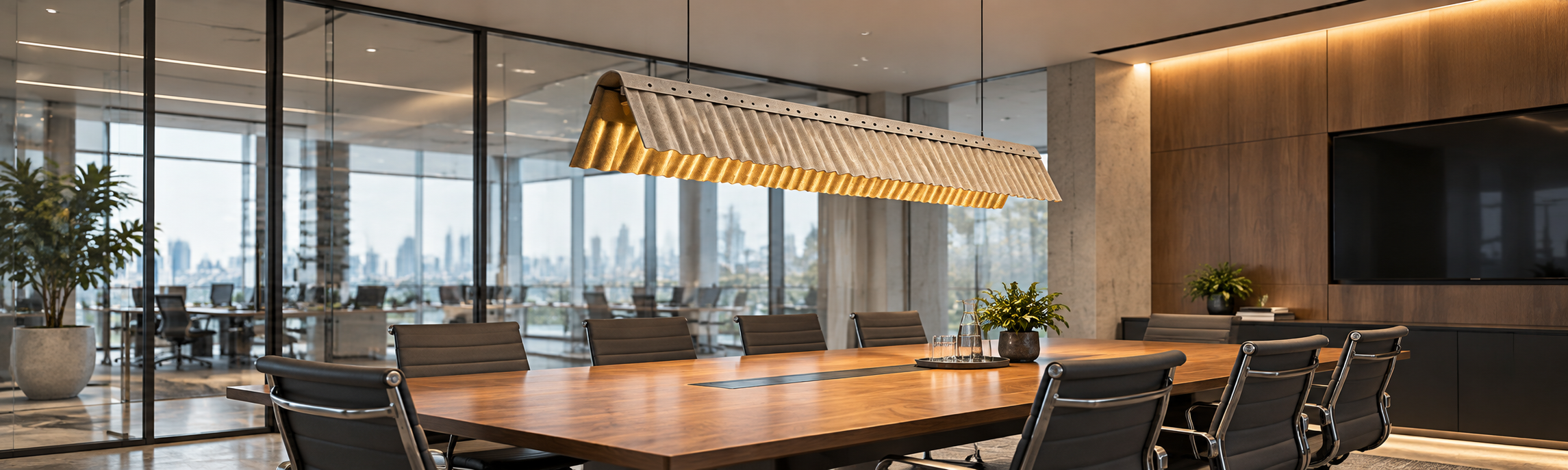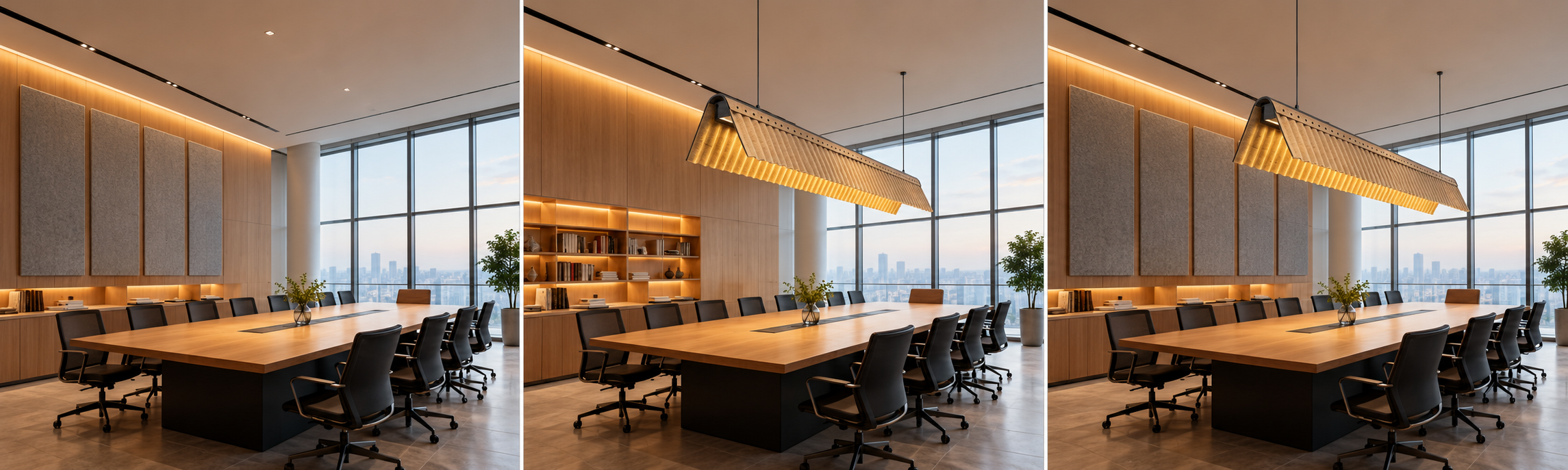

Custom acoustic lighting starts with a clear brief. Before changing a fixture’s size, shape or finish, decide what the standard model cannot provide for your room.
A longer pendant may suit a shared table. A different felt colour may fit the interior design. Each change still needs review against the lighting, acoustic and installation requirements.
The goal is a product the project team can assess and approve. Use these checks to turn a design idea into a defined order.
Start With the Change You Need
Choose a reference model, then list the requested changes beside it. Separate essential needs from preferences. This gives the supplier a clear starting point for a quote.
For example, a table layout may call for a different fixture length, while the felt colour is still open. State both points instead of asking for a fully custom design without a base model.
TUER’s acoustic linear lights offer a starting point for reviewing forms and layouts. Confirm the available changes for the selected model.
Prepare the Room and Ceiling Information
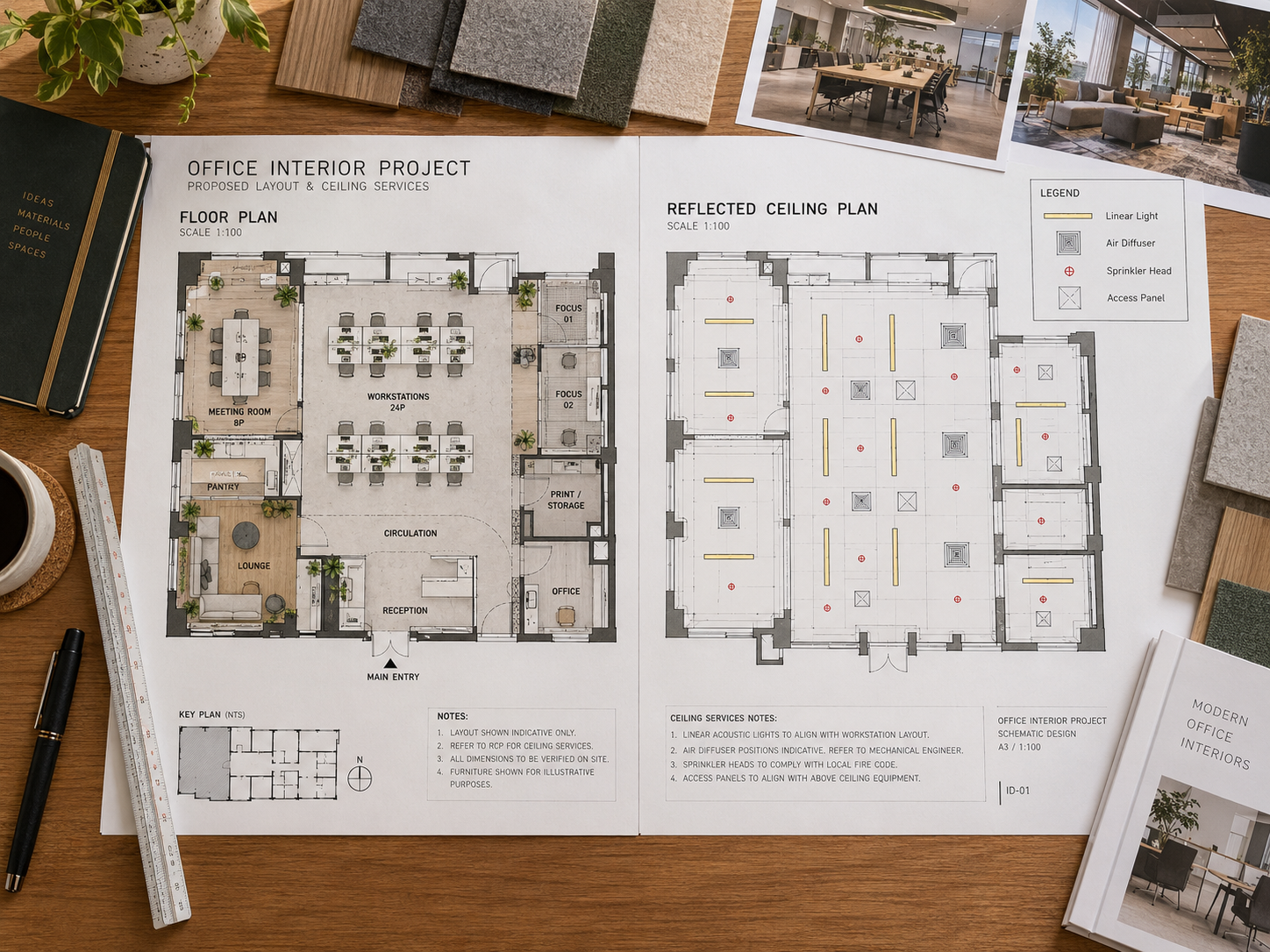
Share a floor plan, ceiling height, furniture layout and site photos. Mark the occupied areas and the positions of the proposed lights.
Include any ceiling services, fixing limits and access needs that may affect the design. A light fixture must fit the site as well as the visual brief.
State the intended quantity and project schedule. Identify who will review the drawings, lighting data and acoustic evidence. Agree who can approve each part before the design moves forward.
Confirm Size, Shape and Finish Together
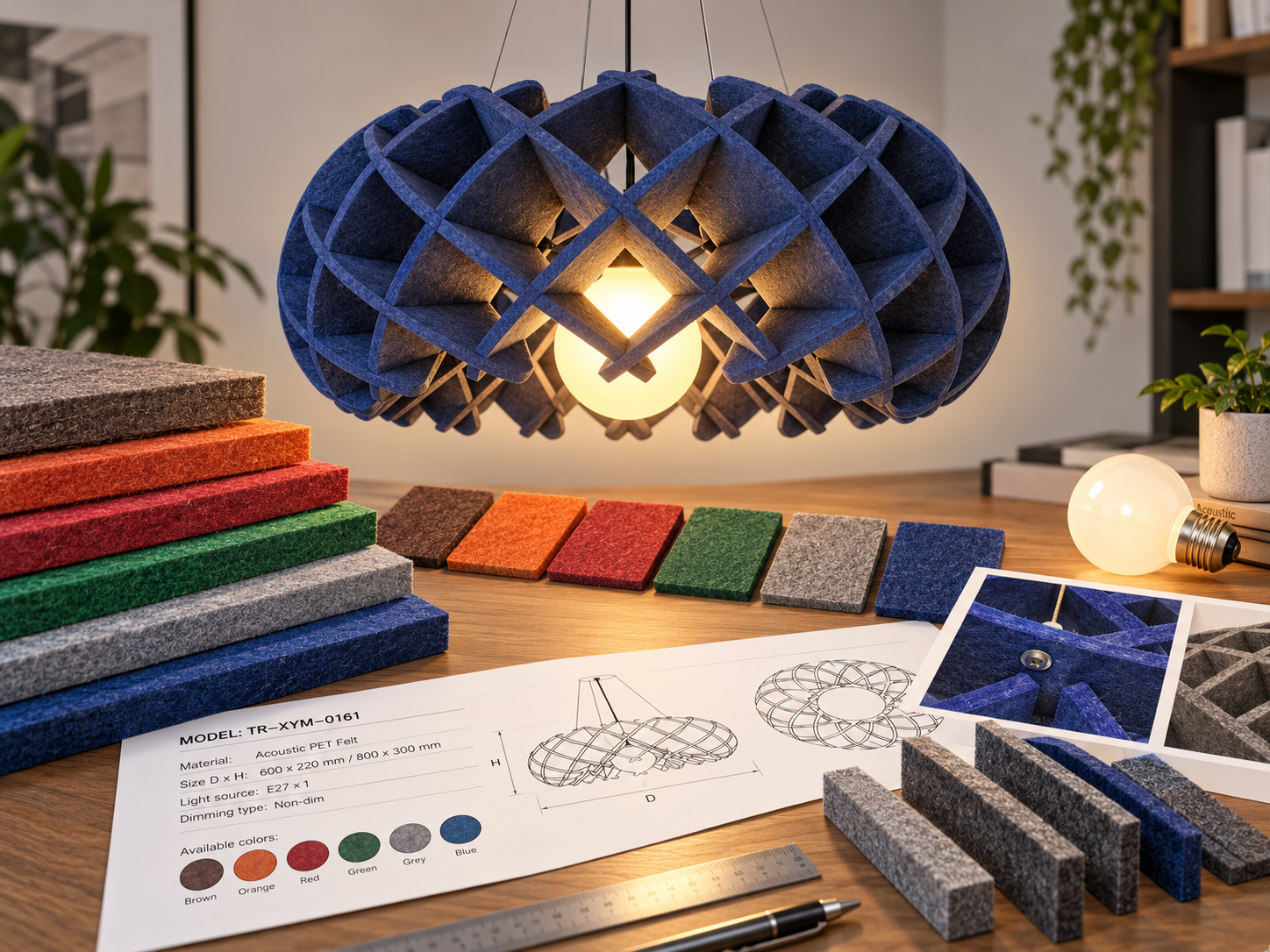
Record the overall length, width or diameter, depth and hanging height. Check these details against the furniture and ceiling plan.
A change in size can also affect the absorbing surfaces, light distribution and fixing details. Ask the supplier which parts of the design need review when dimensions change.
Use a physical colour sample where a close match matters. Agree which sample or finish reference controls the order. Keep the approved colour linked to the product drawing so the team does not confuse options from earlier discussions.
Define the Lighting and Control Needs
Custom acoustic lighting is also a lighting solution. Set out the tasks below the fixture, the desired colour temperature and the proposed control system.
Ask which light output, distribution, driver and dimming options are available for the model. Share those details with the lighting designer. Check the relevant files against the actual room layout and mounting height.
For custom acoustic pendant lights, confirm where the power feed enters and how the suspension works. Resolve access for cleaning, drivers and replacement parts before approving the final form.
Recheck Evidence When the Design Changes
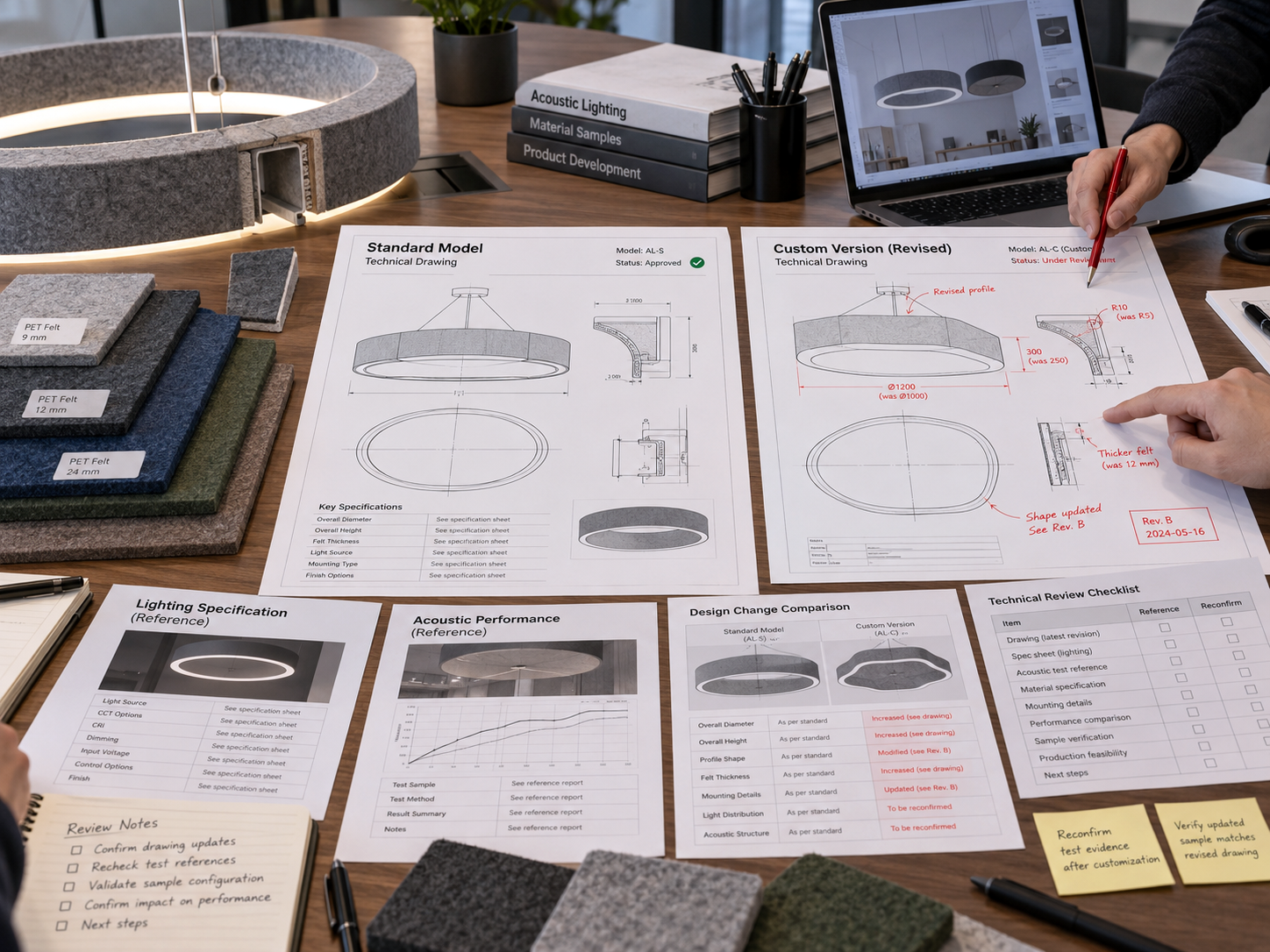
Sound absorbing materials form part of the acoustic design, but a material result alone does not describe every custom fixture. Ask what the available test information covers.
Compare the tested item with the proposed size, shape and exposed surfaces. Record any differences and ask the responsible reviewer whether the evidence supports the intended use.
Keep lighting, acoustic and other approval documents tied to the final version. A report for a standard model does not automatically cover a revised design. Ask what further review or information a change requires before treating its performance as confirmed.
Set the Drawing and Sample Approval Steps
Agree what the supplier will submit for review. Depending on the project, this may include a dimensioned drawing, finish sample or product sample.
State what each item is meant to confirm. A colour sample helps review appearance; it does not establish light output or acoustic performance.
Use a clear revision number for each drawing. After a change, confirm which version replaces the earlier one. Keep open questions visible rather than allowing an email image or an old quote to become the production reference.
Close the Order Details Before Production
Check the final quote against the approved drawing and selected options. Confirm:
- Model reference, dimensions, finish and quantity.
- Light source, driver, controls and electrical requirements.
- Fixings, suspension parts and items supplied by others.
- Packing, delivery scope and the agreed project dates.
For projects with more than one fixture size, give each version its own reference. List the quantity against that reference so the quote, drawings and packing list describe the same order.
Ask when the delivery period starts and which approvals it depends on. Keep lead time, minimum order quantity and any sample costs in the written quote. These terms need confirmation for the actual order.
If the design changes after approval, request an updated quote and drawing. Confirm any effect on price, timing and supporting information before proceeding.
Prepare Your Custom Lighting Brief for TUER
Use the acoustic lighting specification checklist to organize the wider project requirements.
Contact TUER with the reference model, room plan, requested changes, quantity and target delivery date. Ask which options and supporting documents are available for that version. Agree the final details before approving production.