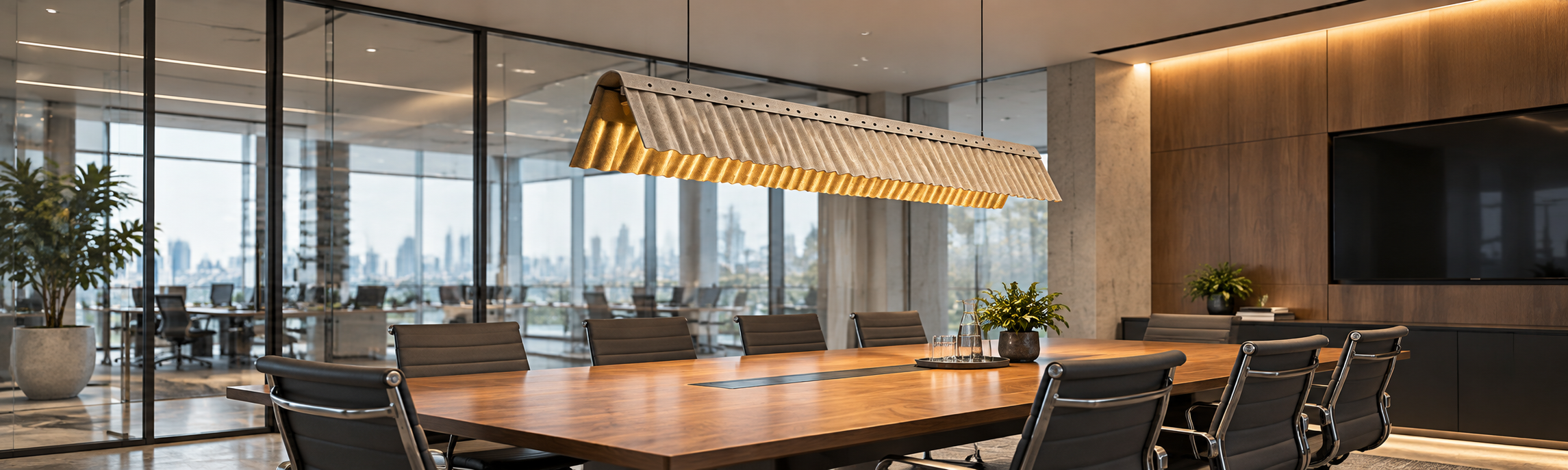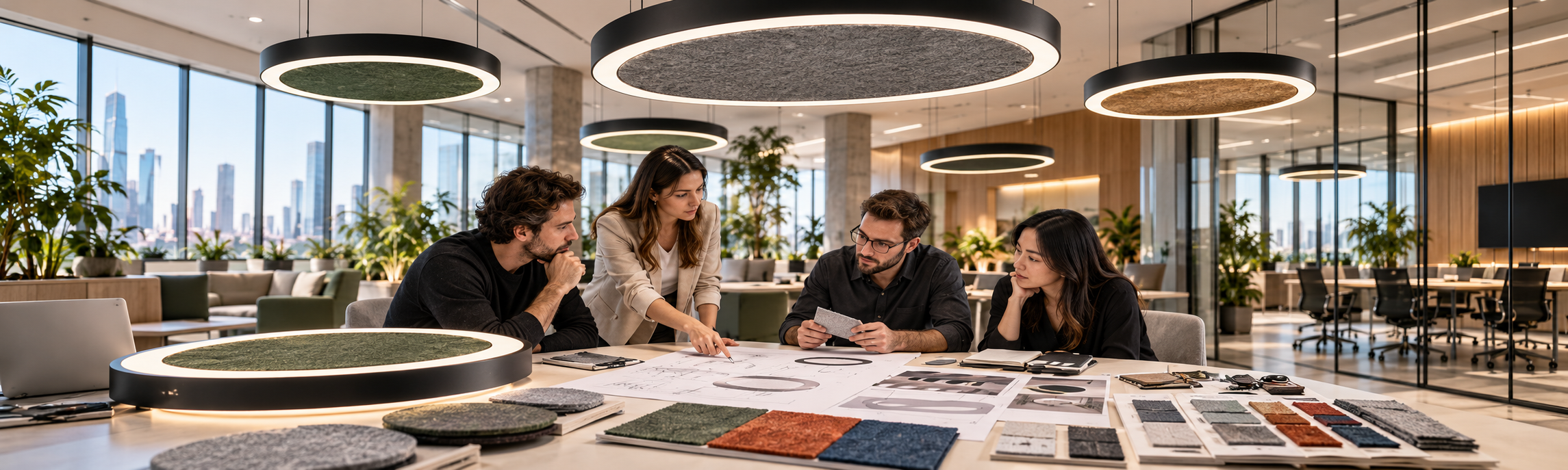

Start with the room when choosing between acoustic lighting and acoustic panels. Decide what needs to stay and what needs to change.
If the existing lights work well, separate panels may address reflections without replacing them. If the project needs new lighting too, acoustic lighting is worth reviewing. A larger room may need both.
The useful comparison is between complete room schemes. One pendant and one wall panel rarely do the same job.
What Is the Difference?
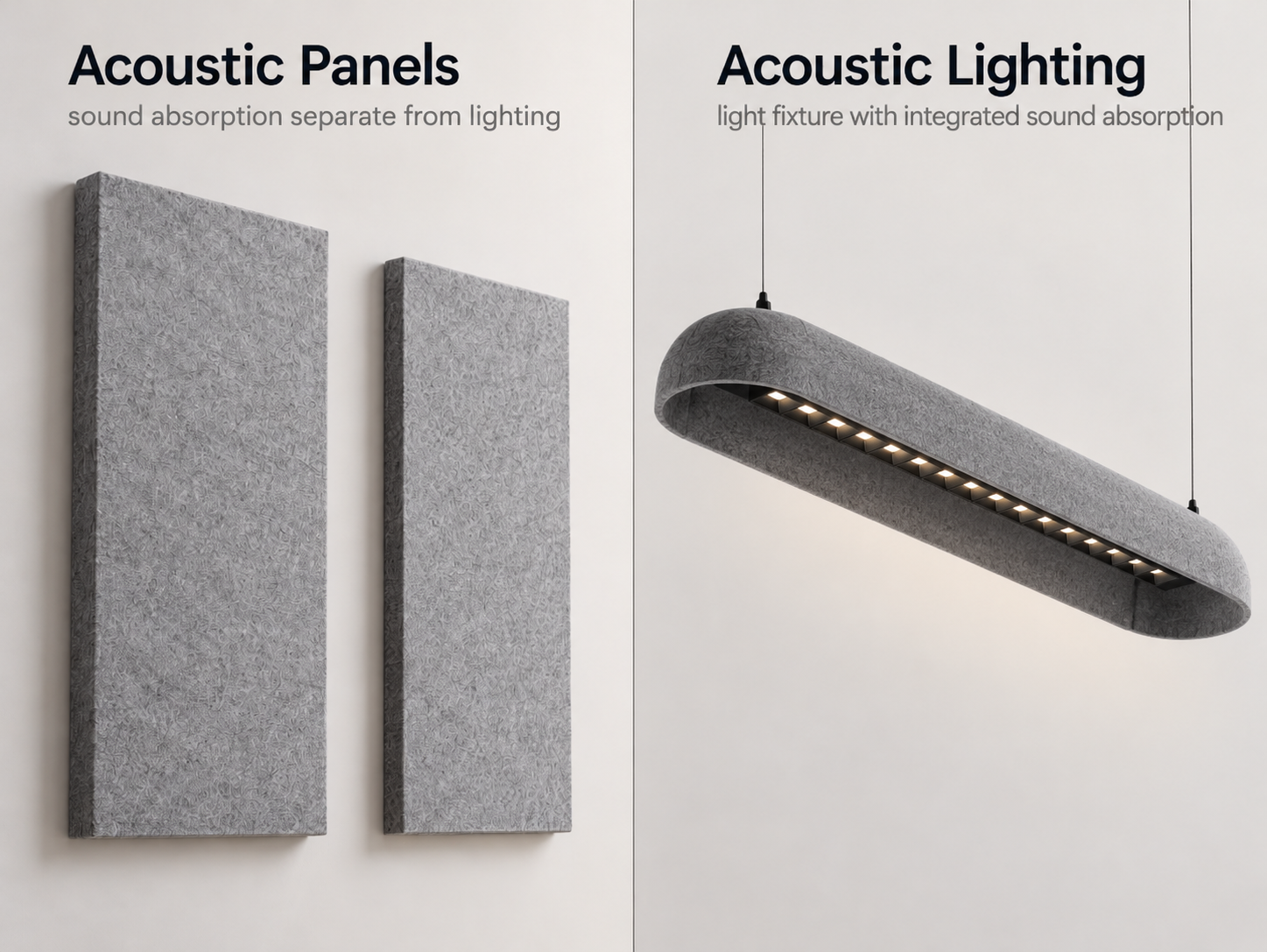
Acoustic lighting combines a light fixture with sound absorbing materials. Standalone acoustic panels provide sound absorption separately from the lighting system. They can sit on walls or ceilings, depending on the product.
Both can help absorb sound waves that would otherwise reflect within the room. They serve as sound absorbers, but their useful contribution depends on the tested product and layout.
Neither approach alone establishes sound isolation between rooms. If private conversations are the concern, review walls, doors and other sound paths as well.
Keep the Lights and Add Panels
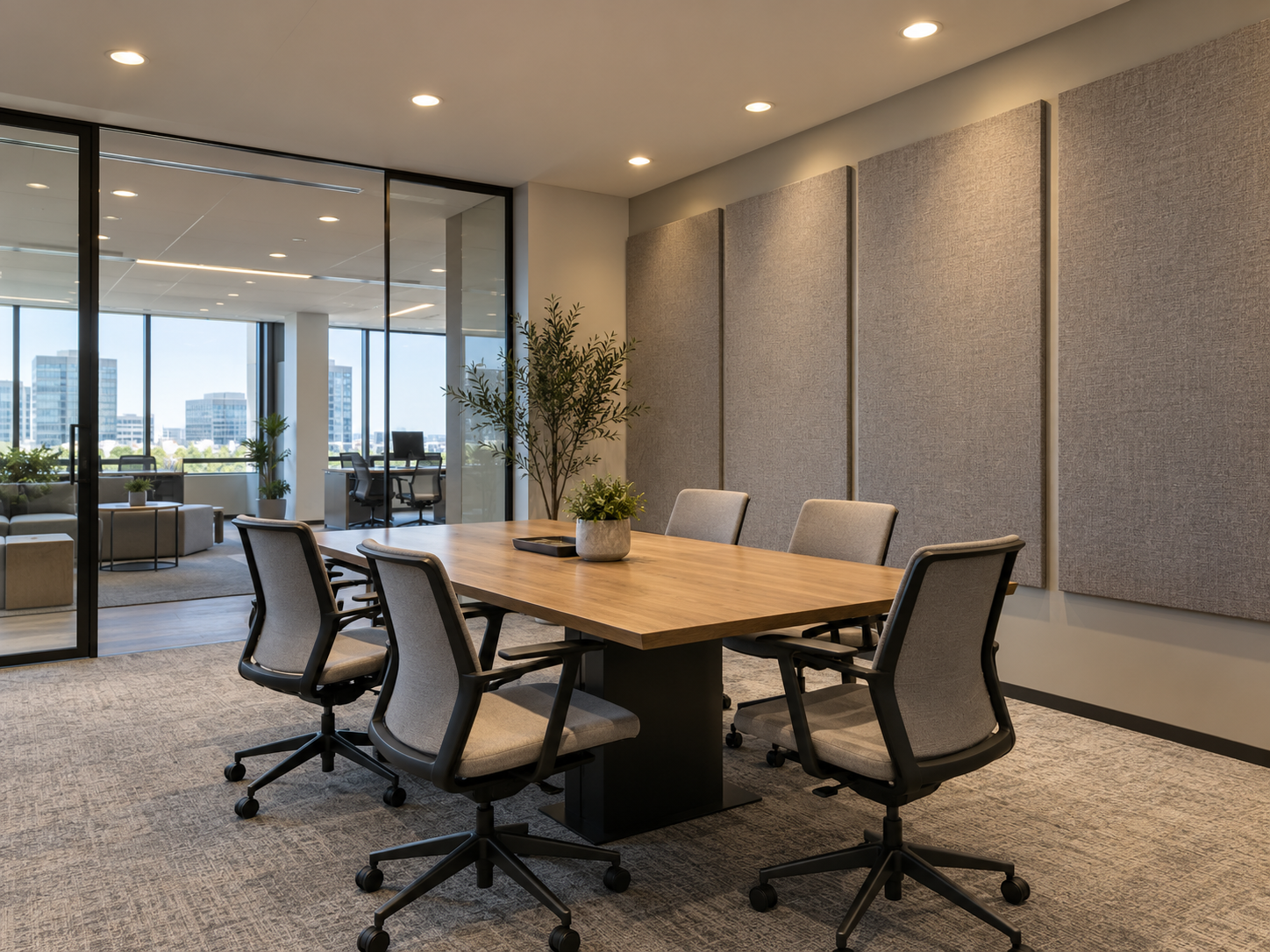
Consider separate acoustic panels when the existing lighting already meets the brief. This can suit an office refresh or a room where changing wiring would add unwanted work.
Panels may also provide treatment where lights do not belong. A reflective wall beside a discussion area might need attention even when the lighting layout is already right.
Check the mounting surface, available area and product data. Acoustic panels absorb sound under stated conditions; their size or appearance alone cannot establish the result.
The benefit is design flexibility. The acoustic treatment can follow the room’s needs while the lighting stays in place.
Consider Acoustic Lighting During a Lighting Upgrade
Illustrative meeting-room layout with a pendant above the table. Check light and acoustic data separately.
Acoustic lighting can suit a project that needs both illumination and added absorption. It gives designers a way to bring these functions into the same ceiling element.
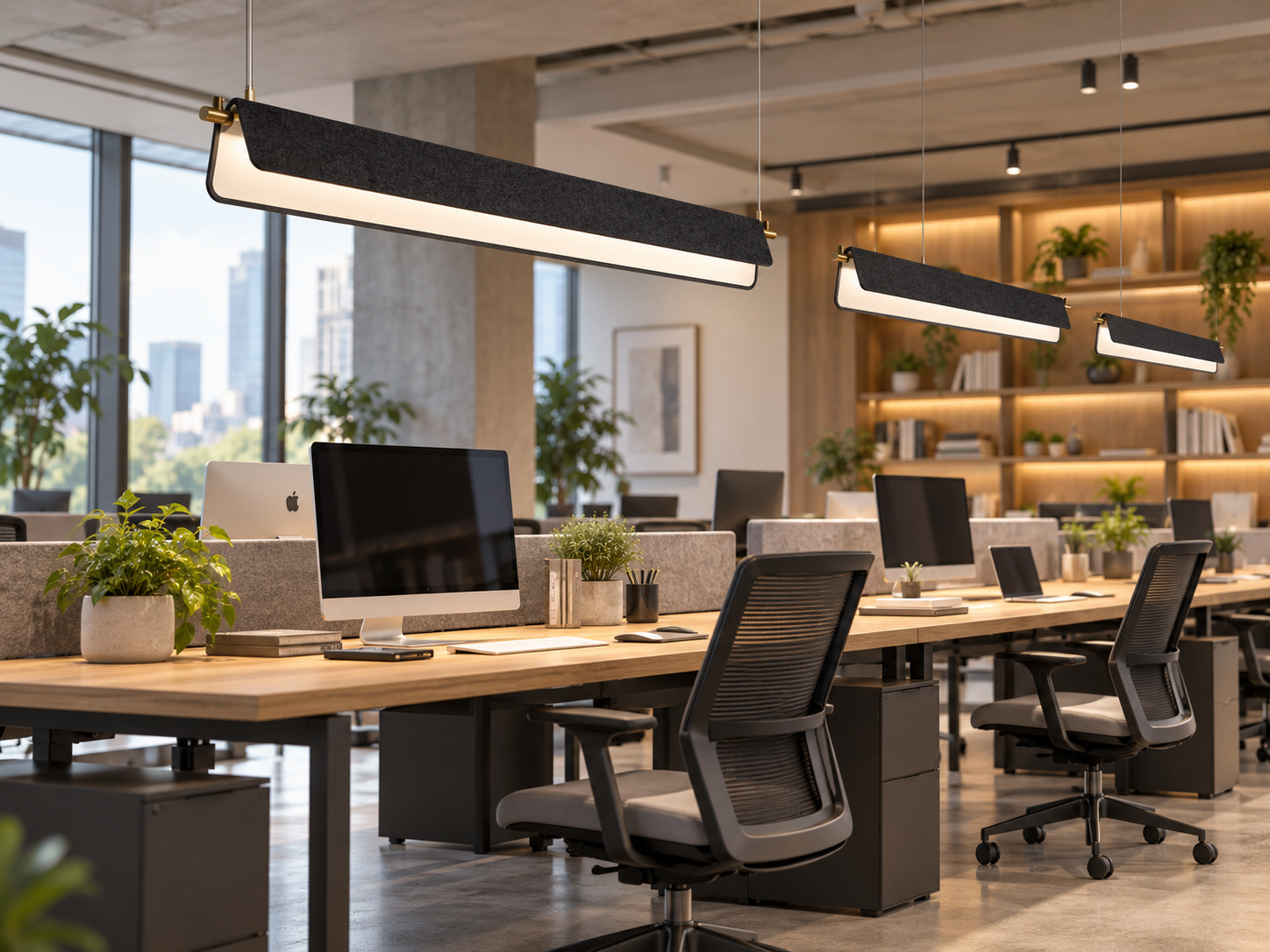
Above a shared table, a pendant can provide light and place absorbing surfaces near an occupied area. Repeated fixtures may also suit workstation rows.
The lighting solution still needs its own assessment. Check desk or table coverage, glare, controls, mounting height and maintenance access. The felt shade must work with the light source.
Explore acoustic linear lights or acoustic pendant lights to compare fixture formats. Confirm the data for the model under review.
Combine Both When the Room Needs More Treatment
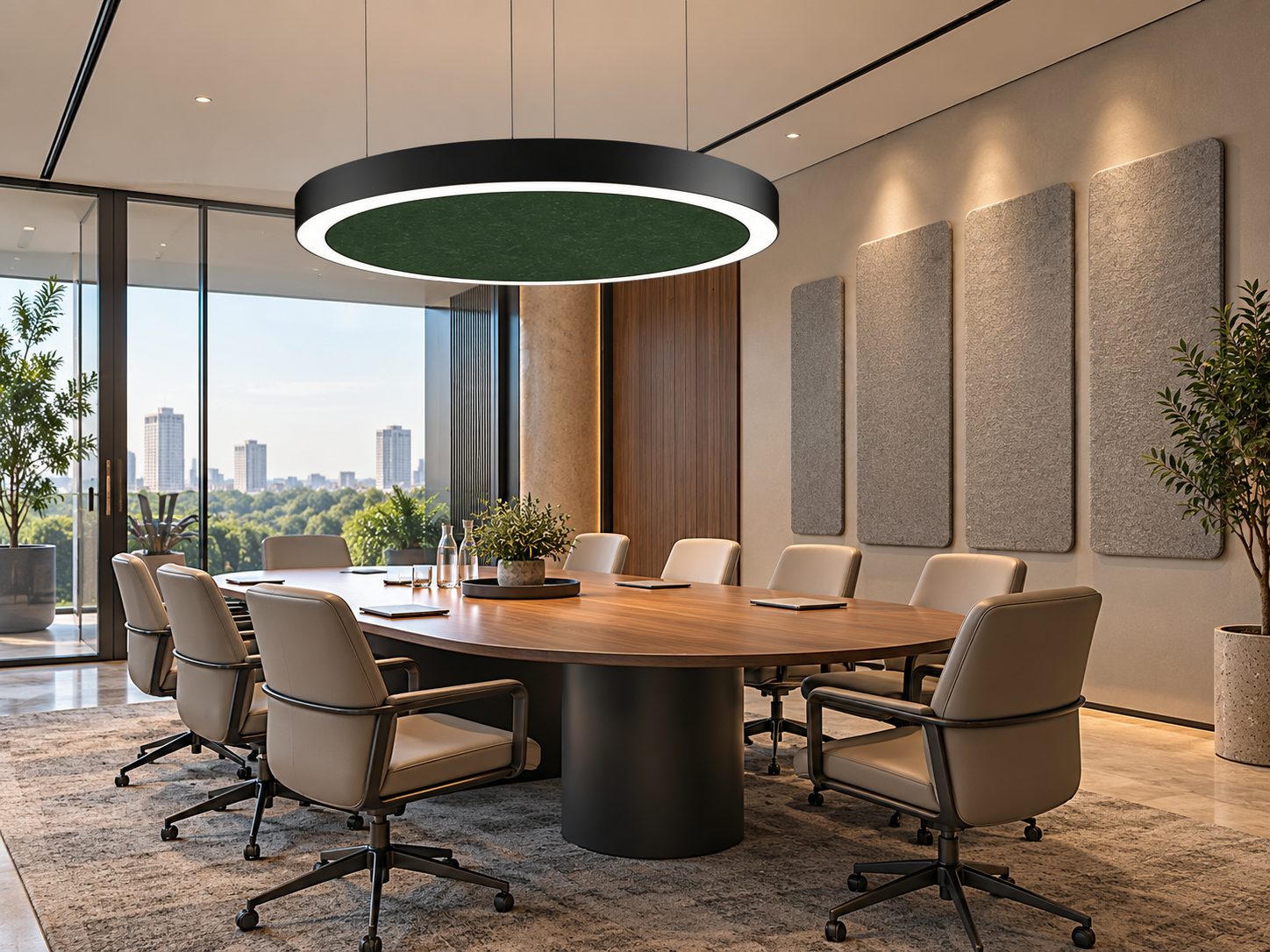
A light fixture belongs where it supports the lighting plan. The room may need absorption beyond those positions.
In conference rooms, for example, a pendant over the table may form part of the scheme. Wall panels or ceiling treatment may address other reflective surfaces. This is a layout example, not a prediction of acoustic performance.
Combining products also gives the interior design team more ways to distribute treatment. The aim is useful coverage, rather than a ceiling filled with unnecessary fixtures.
Judge the full plan against the room’s needs for reducing echoes and supporting speech clarity. Add enclosed spaces when conversations require privacy.
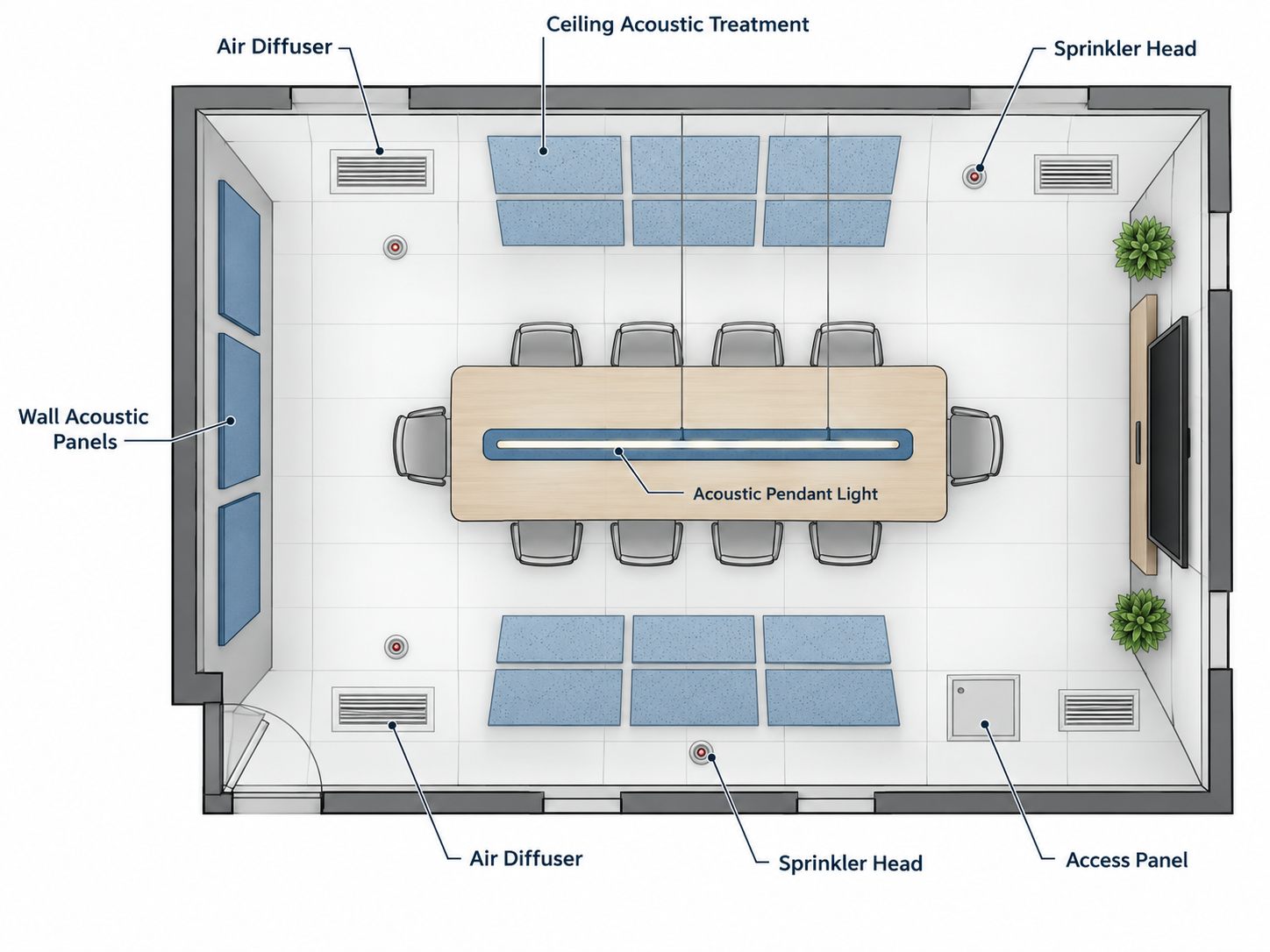
Before ordering, mark both lighting and treatment positions on one ceiling plan. This makes clashes with air outlets, sprinklers and access panels easier to spot. It also shows whether the proposed fixtures follow the occupied areas or simply fill spare ceiling space.
Compare the Complete Installed Cost
A panel price and a pendant price are not a fair comparison on their own. One scheme may retain existing lights; another may replace them.
For each proposal, include:
- Products, quantities and any separate lighting still needed.
- Fixings, supports, wiring and site work.
- Access for cleaning, drivers and replacement parts.
- Delivery needs and any planned future changes.
An integrated product does not automatically make the project cheaper. Compare complete quotes for the same brief and intended performance.
Check Evidence Before Choosing a Winner
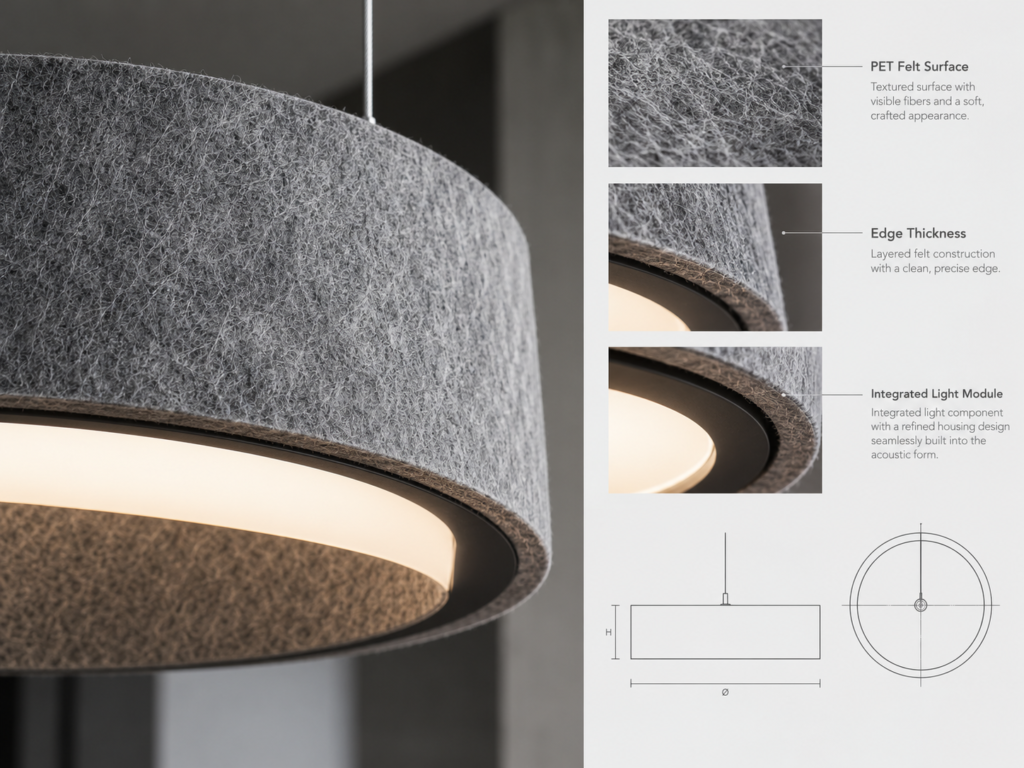
A material rating does not, by itself, describe a finished acoustic light. Ask which product, mounting setup and exposed surfaces the test covers.
Before comparing ratings, review what NRC, STC and CAC measure. Absorption and sound insulation answer different design questions.
ISO 354 describes laboratory sound absorption measurements for materials and objects. A room outcome also depends on quantity, position and the other surfaces present.
Review the lighting and acoustic evidence separately, then bring them together in the project assessment. Use the acoustic lighting specification checklist to organize the information request.
Three Questions to Set Your Direction
Do the lights need replacing? If they already work well, first assess whether separate treatment can meet the acoustic brief.
Where does the room need absorption? Check walls and ceiling areas as well as the proposed lighting positions.
What does each complete scheme provide? Compare light quality, acoustic evidence, installation and ongoing care together.
These questions help turn a broad product comparison into a shortlist for the actual room.
Discuss Your Project With TUER
Prepare the floor plan, ceiling height, furniture layout and photos. Identify the lights you intend to retain and the acoustic concerns you want to address.
Contact TUER with that brief and your preferred fixture formats. Confirm the available models and supporting information before approving the lighting scheme.